Stable 0.1.9 — GitHub and PyPI published
gpbiometricspy 0.1.9 was published via the successful protected GitHub Actions Trusted Publishing workflow on 21 October 2026. Both canonical distributions returned HTTP 200 from PyPI and have publish attestations. The GitHub v0.1.9 Release retains wheel, sdist and checksums. This documentation-only patch preserves the previously qualified stable scientific APIs; October experimental research modules remain source-only.
Scientific Python + a guided research application
From recorded signals to auditable research results.
gpbiometricspy combines a validated Python scientific engine with gpbiometricspy Studio, a guided interface for Gazepoint eye-tracking, EDA/SCR, PPG/HRV, pupil, gaze, AOI, event-alignment and multimodal workflows.
Start from the research task you need to complete—not from a list of functions.
Start a research project safely
Create a reviewable project structure
Separate raw exports, metadata, mappings, QC, events, derived tables, models, figures, reports, manifests and logs before private research data enter the workflow.
2 · AdaptMap your own export without hiding provenance
Preserve source names, preview proposed mappings, verify units, timing and event semantics, and retain an adaptation manifest before standardising fields.
3 · ValidateEstablish measurement readiness
Audit schema, sampling, missingness, signal activity, resets, source provenance and event structure before deriving substantive results.
4 · AnalyzeRun a complete checked workflow
Move from retained QC evidence into processing, candidate events, plots, exports and report-ready methods evidence using real package calls.
Start from your research task
Use the package from data to report
Run real package calls through QC, EDA processing, candidate events, plots, exports and methods evidence, then learn how to substitute your own research export.
New datasetValidate measurement before analysis
Audit schema, sampling, missingness, timing, provenance and event structure before deriving scientific features or models.
Signal workflowAnalyze what you recorded
Choose EDA/SCR, PPG/HRV, pupil/gaze/AOI, multimodal alignment, QC/reporting or interoperability.
New in 0.1.8 · PPGAudit PPG measurement equity
Keep pigmentation provenance, raw signal quality, paired availability and reference agreement separate; connect known-truth synthetic evidence with the authorized STEP external-evidence tranche.
Multimodal studyAlign events and streams defensibly
Separate clock correction from resampling, inspect drift and gaps, and retain explicit timing provenance.
StatisticsChoose a model that matches the design
Compare grouped predictive models with hierarchical location–scale, robust, random-slope and crossed participant–item families.
Reviewer / auditorInspect the evidence behind the package
Trace frozen parity, exact-main coverage, real-data smoke testing, cross-toolbox validation and interpretation boundaries.
One research path, two interfaces
Studio and the Python API call the same package implementation. Use the visual application when you want a guided workflow; use Python when you need scripts, notebooks, automation or custom integrations.
See the evidence, not only the output
The core gallery is regenerated from the checked-out Python package during documentation CI using bundled synthetic/public demonstration data. Version 0.1.8 additionally includes deterministic PPG measurement-equity SVG evidence generated by its dedicated known-truth script.
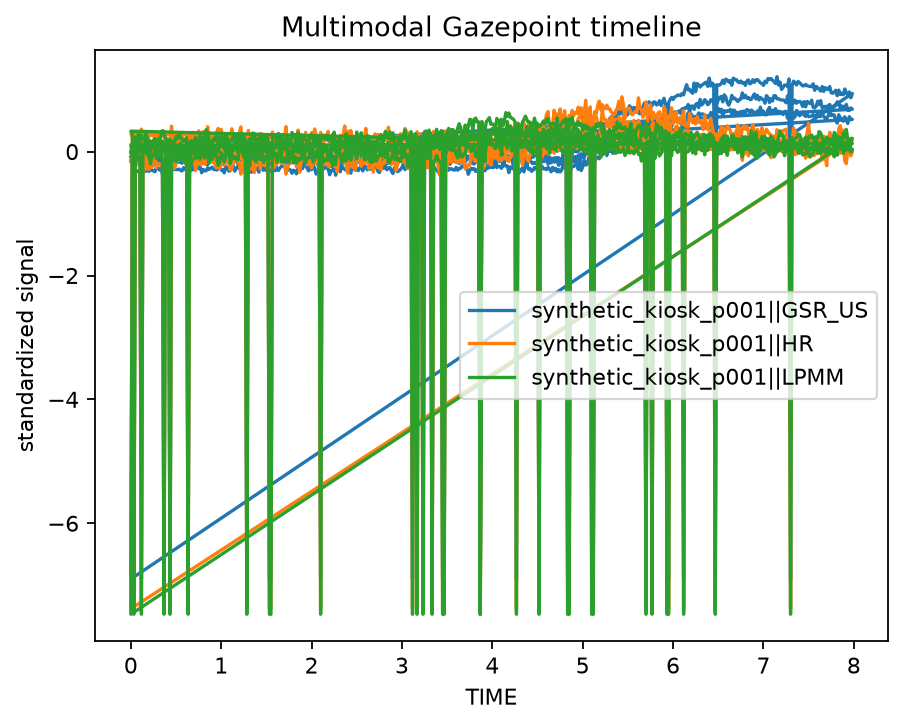
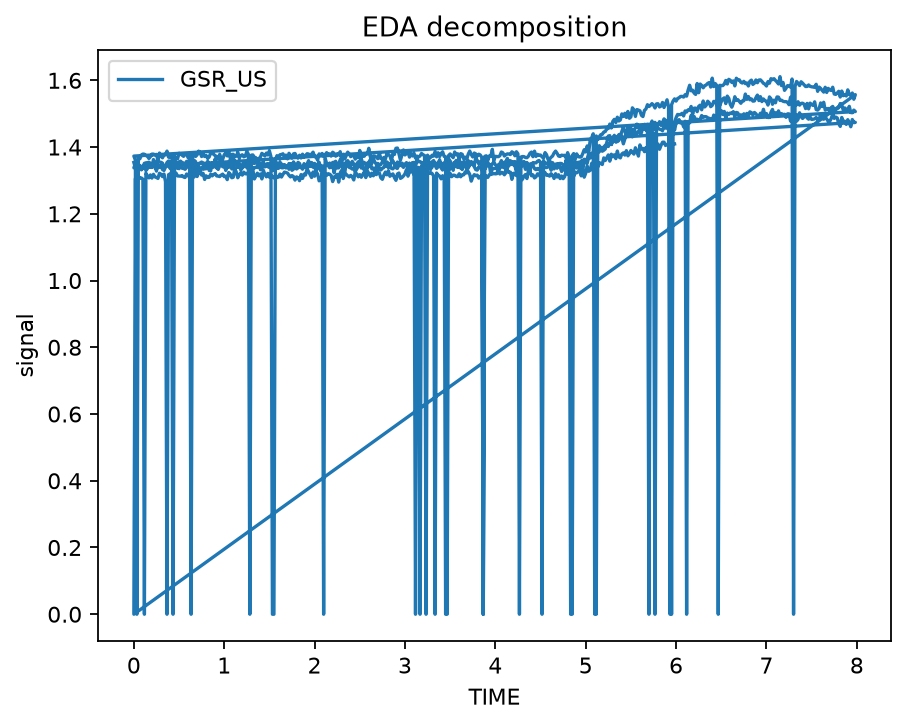
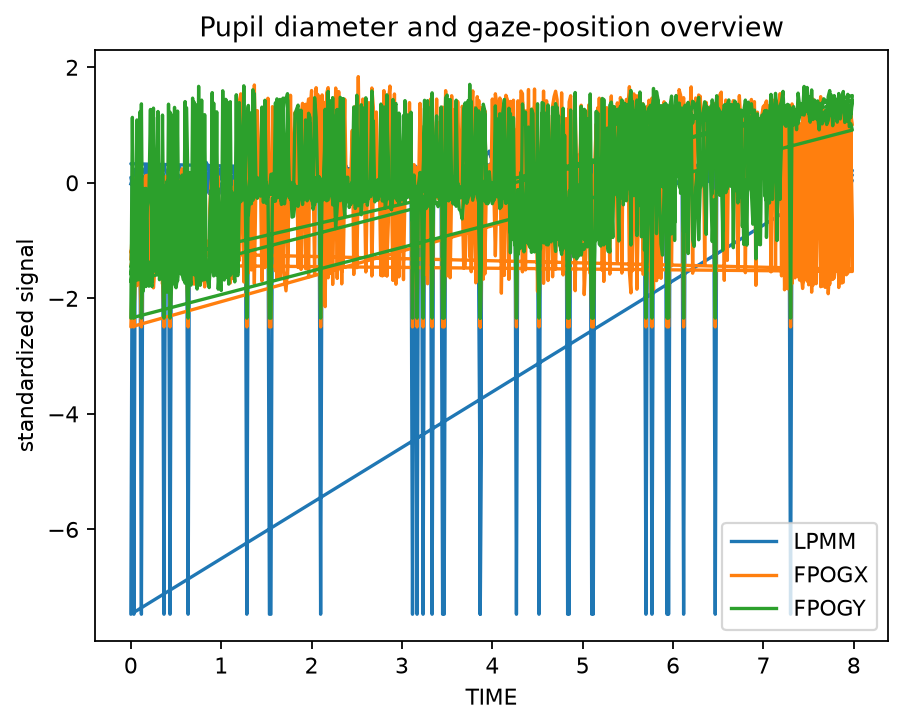
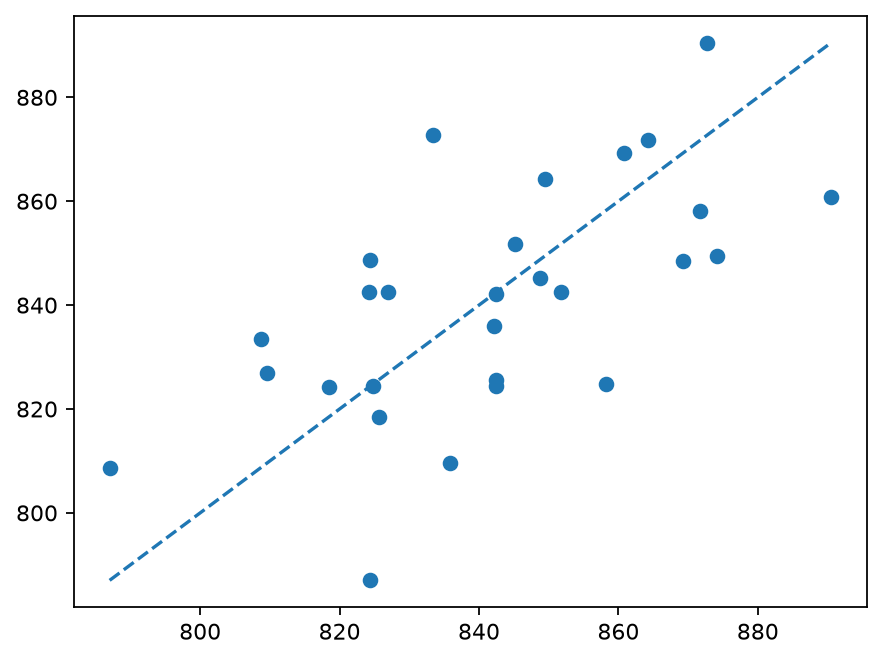
Browse all 20 showcased deterministic figures →
New in 0.1.8 — PPG measurement equity
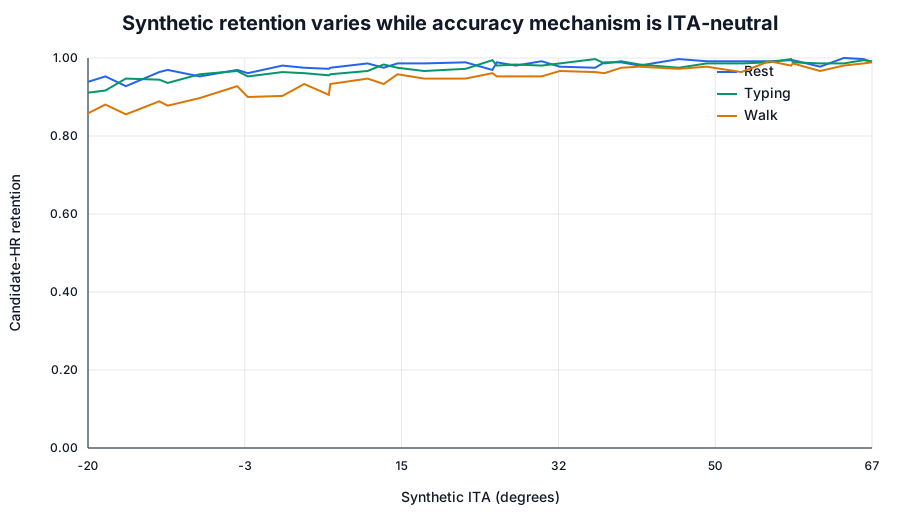
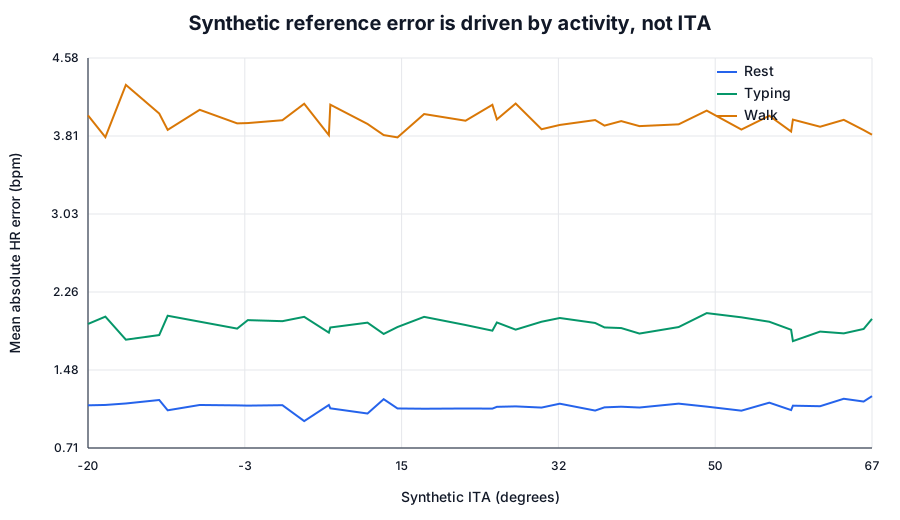
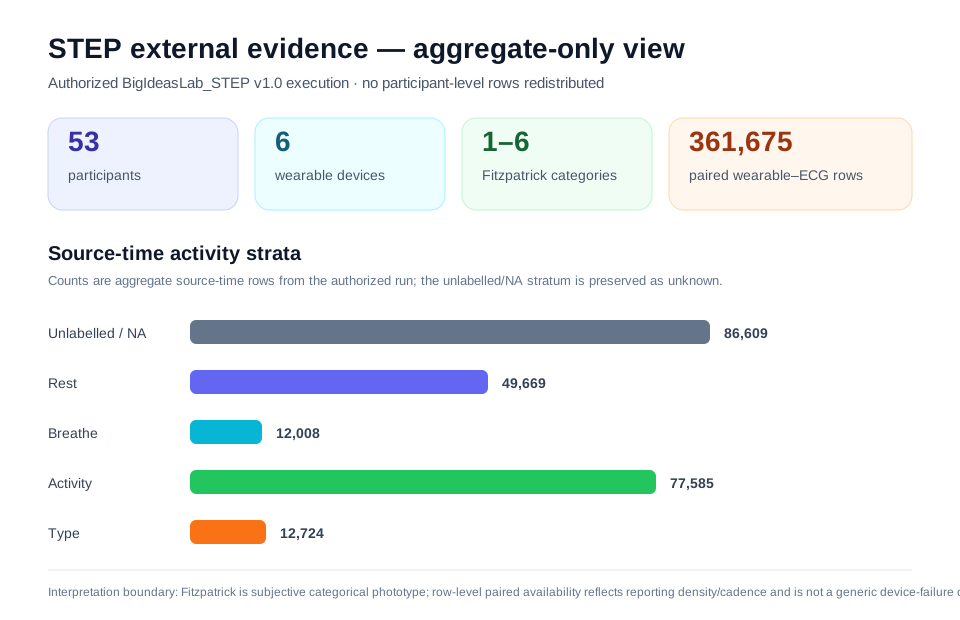
The PPG measurement-equity route separates pigmentation provenance, raw signal quality, paired availability, and reference agreement. STEP contributes independently collected wearable–ECG evidence while retaining Fitzpatrick as subjective categorical provenance and reporting-density caveats.
Choose the analysis layer
Measurement + provenance
Sampling, timebase, cardiac-source identity, validity, missingness, QC and interpretation constraints come before modelling.
Check measurement evidence →Signal workflows
EDA/SCR, PPG/HRV, pupil, gaze, fixation, AOIs, events, synchronization and multimodal summaries.
Choose a signal workflow →Grouped prediction
Continuous and ordinal grouped boosting with whole-group validation and explicit seen-versus-unseen group semantics.
Explore predictive methods →Distributional modelling
Gaussian, robust Student-t, random-slope and crossed participant–item location–scale models with reproducibility certificates.
Compare Python-native methods →Validation is part of the product
The 0.1.9 release is now the current public stable version. The preceding 0.1.8 scientific qualification is preserved at exact source SHA 32cafd5565bdf4a7575dcf5c5d6bb2bfbe101e5d. Its scientific qualification baseline immediately before the stable freeze was a75eb1d73791213e6e830ff94975f632455632e2. All 12 platform/Python 3.11–3.14 lanes passed, with 874/874 tests and 15,612/15,612 statements on the canonical scientific suite. Branch evidence records 7,315/7,334 raw branches = 99.7409%, exactly 19 audited residual arcs, 0 unexpected, stale, or unaudited branch debt, and 7,334/7,334 audited branch accounting. Docs/Pages, CodeQL, Deep Parity, Interoperability, Private Real Data Validation, release-handoff safety, Studio packaging, and Windows release-policy validation are green.
The 0.1.8 PPG measurement-equity tranche also includes deterministic synthetic evidence and an authorized local BigIdeasLab_STEP v1.0 execution. STEP Fitzpatrick phototype is retained as subjective categorical provenance; row-level paired availability is not relabelled as generic device missingness or fairness. ENCoDE remains deferred, and this release does not claim clinical SpO₂ validation.
Inspect parity, exact-main evidence and validation layers →
Scientific boundary
Physiological and eye-tracking signals are measurements, not direct proof of emotion, stress, trust, preference, cognition, health status or diagnosis. Random effects and random slopes describe modelled heterogeneity; predictive importance is not causal importance; provenance certificates bind declared evidence rather than proving sensor validity. PPG pigmentation analyses distinguish signal quality, availability and reference agreement and do not establish device fairness or causal optical effects. Scientific interpretation remains constrained by acquisition quality, study design and model assumptions.
Current stable release 0.1.9
gpbiometricspy 0.1.9 was published on 21 October 2026 through the canonical artifact pipeline, protected PyPI Trusted Publishing and verified package uploads.
- GitHub Release
v0.1.9 - PyPI
gpbiometricspy 0.1.9 - Successful publishing workflow and attestation evidence
- The October methods article and synthetic plots document source-only research. External empirical qualification remains open and is not inferred from release CI.
Archived release 0.1.8
gpbiometricspy 0.1.8 was published on 4 October 2026 after the protected pull-request, exact-main, canonical release, and Trusted Publishing gates completed successfully.
- GitHub Release
v0.1.8 - PyPI
gpbiometricspy 0.1.8 - wheel SHA-256:
b1a88c2306843df2cc324b8987335bba413d27715a81f451ba0a036afe0a39f0 - sdist SHA-256:
231c14bab9eeddb0e0e6e9dce0cc095451cf48d7dcd160c5c553005482d7c24d
PyPI Trusted Publishing generated digital attestations for both distributions. A 0.1.8 Zenodo version DOI remains unclaimed until genuine ingestion is independently verified.