gp3tools for Python
From raw Gazepoint exports to auditable eye-tracking analysis.
gp3tools is a broad Python toolkit for importing, validating,
preprocessing, visualising, modelling and reporting Gazepoint GP3 /
Gazepoint Analysis data.
The Python implementation was validated against the frozen public API of gp3tools R 2.3.0, while providing native Python workflows for gaze, pupil, AOI, fixations, scanpaths, quality control, multimodal analysis, statistics and research reporting.
Get started Browse the API Release v0.1.3





Install the validated alpha
Verify:
Installation and first workflow →
What can gp3tools do?
-
Import & harmonise
Read Gazepoint exports, folders, fixation tables, summaries and external face-analysis data.
-
Quality control
Audit sampling rate, tracking quality, missingness, master-table integrity, screen bounds, coordinates, exclusions and model readiness.
-
Pupil preprocessing
Detect artifacts and blinks, combine binocular channels, interpolate, baseline-correct, smooth, downsample and reconstruct pupil signals.
-
AOI & transitions
Work with static, dynamic and polygon AOIs, entries, windows, transition matrices, entropy, sequences and network summaries.
-
Fixations & scanpaths
Analyse fixation/saccade events, scanpath geometry, clustering, stability, representative paths and detector agreement.
-
Models & inference
Prepare eye-tracking models, run time-course analysis, cluster permutation, sensitivity analysis and Bayesian bridge workflows.
-
Visualisation
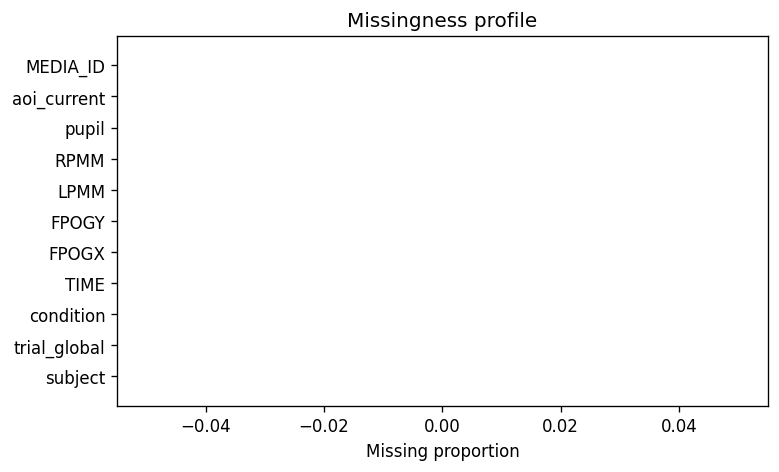
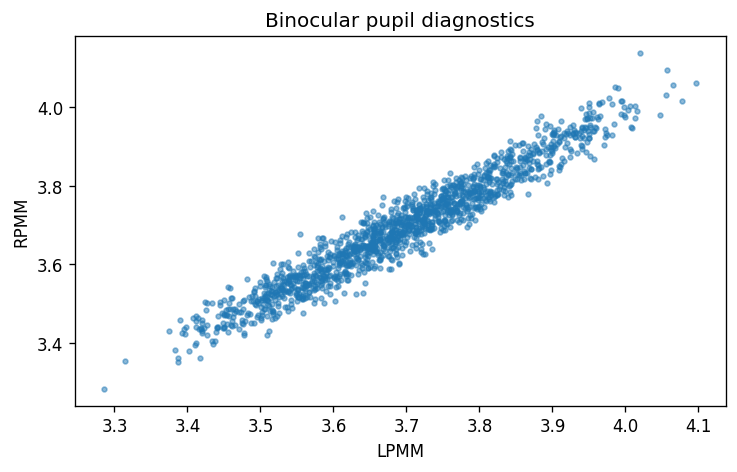
Create heatmaps, pupil curves, missingness plots, scanpaths, transition matrices, cluster figures and binocular diagnostics.
-
Interoperability
Prepare outputs for BIDS, HDDM, eyetrackingR-style, pupillometryR-style, gazer, eyetools and gpbiometrics workflows.
A workflow in a few lines
import gp3tools as gp3

master = gp3.load_example_master()

sampling = gp3.check_sampling_rate(
    master,
    time_col="TIME",
    group_cols=["subject", "trial_global"],
)

processed = gp3.preprocess_gazepoint_signals(
    master,
    pupil_col="pupil",
    time_col="TIME",
)

transitions = gp3.compute_gazepoint_aoi_transition_matrix(
    master,
    aoi_col="aoi_current",
)

fig = gp3.plot_gazepoint_heatmap(master)
The bundled datasets are synthetic, so core workflows can be reproduced without private participant data.
See the data, not just the API
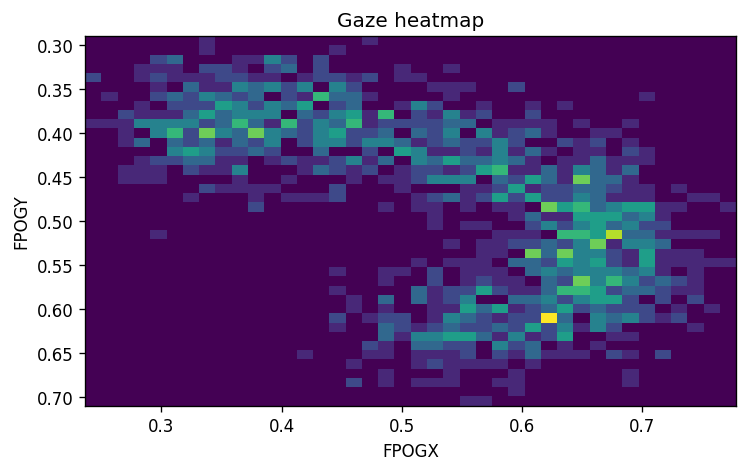
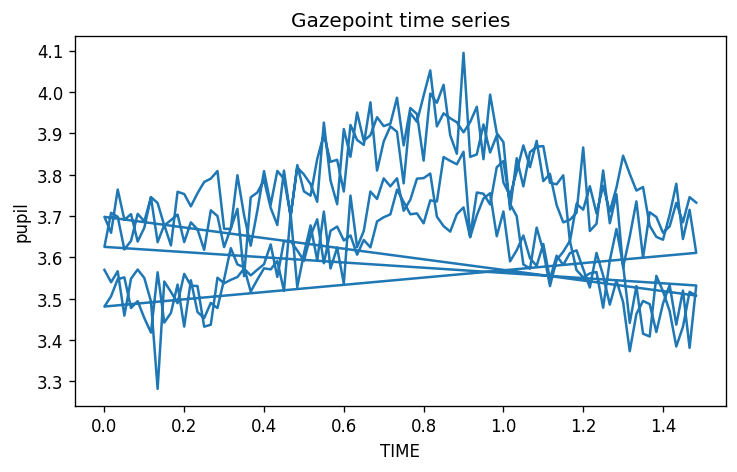
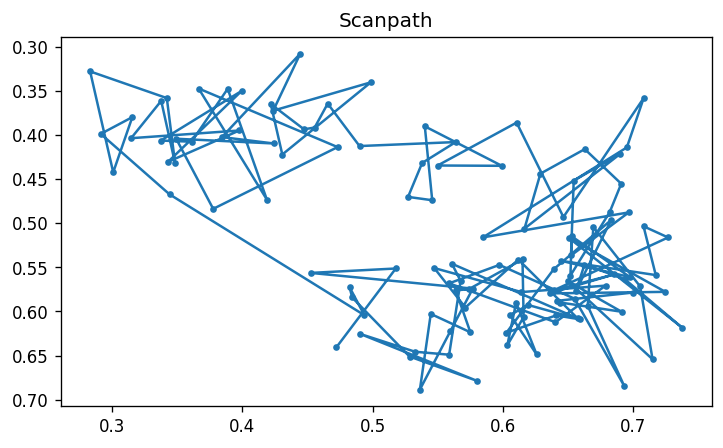
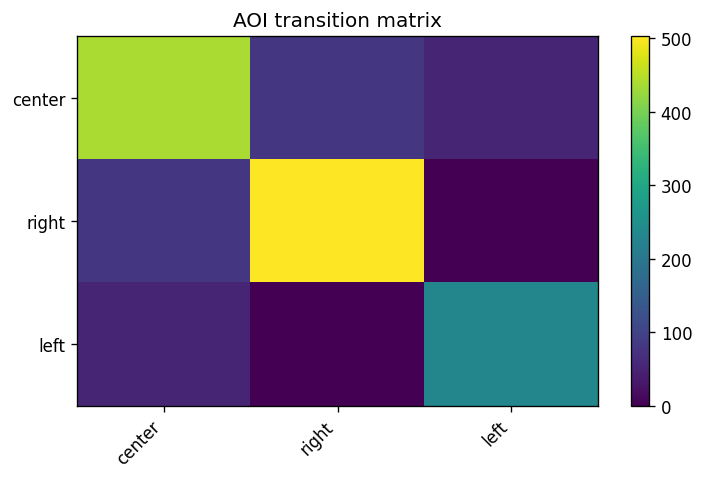
Validation at a glance
Validated release surface
Current published v0.1.3 (21 October 2026) is a documentation-only maintenance patch preserving the frozen public API. The original v0.1.1 qualification established the following contract: 278 canonical R exports and exposes 285 Python public names, with 684 passing tests, 90.06% line coverage, R1–R4 behavioral and semantic validation, strict documentation builds, runnable examples, distribution builds and wheel-installation validation.
Scientific backend transparency
Functions whose original R implementation depended on engines such as
lme4, glmmTMB, mgcv or brms are documented as Python-native
adaptations rather than falsely presented as coefficient-identical
implementations.
Read the parity and validation status →
Citation
Balaskas, S. (2026). gp3tools: An R Package for Reproducible Analysis and Reporting of Gazepoint GP3 Eye-Tracking Exports. Journal of Eye Movement Research, 19(4), 76. https://doi.org/10.3390/jemr19040076