Plot gallery
A scientific figure should make the interpretation boundary visible as well as the result.
Research lifecycle
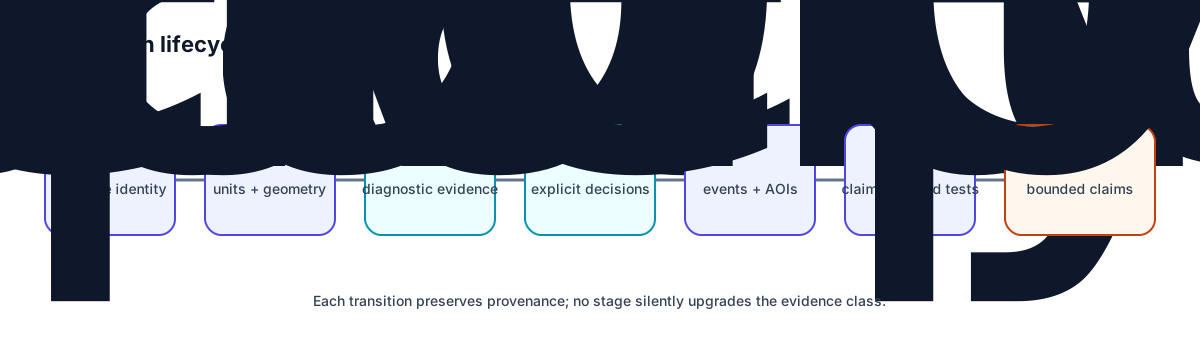
Use for: understanding where source preservation, QC, review, analysis, validation, and reporting sit.
Do not infer: that completing every stage establishes external or construct validity.
Evidence ladder

Use for: showing that observations, diagnostics, review decisions, analysis/validation evidence, and scientific claims are distinct layers.
Do not infer: that a higher layer is automatically justified because a lower layer exists.
QC diagnostics
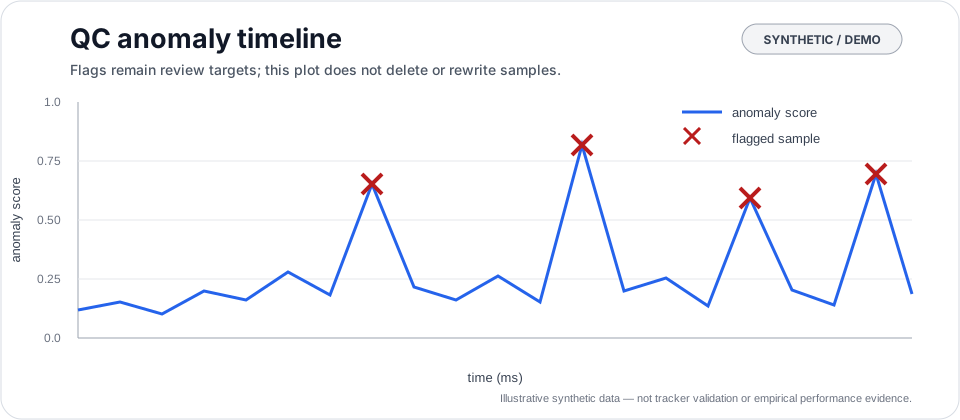
Use for: identifying quality patterns requiring interpretation or review.
Do not infer: that a QC flag is automatically an exclusion.
Event diagnostics
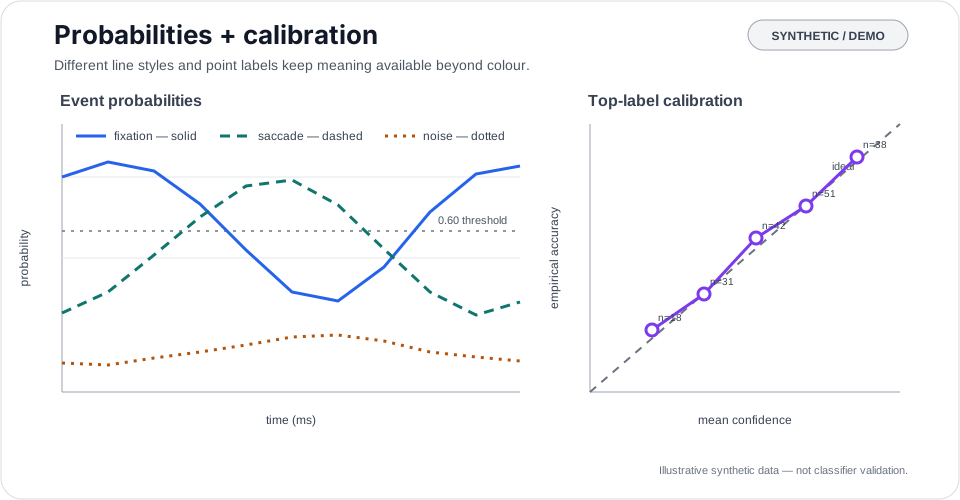
Use for: inspecting event segmentation behaviour.
Do not infer: that a visually plausible threshold is universally valid.
AOI scanpath
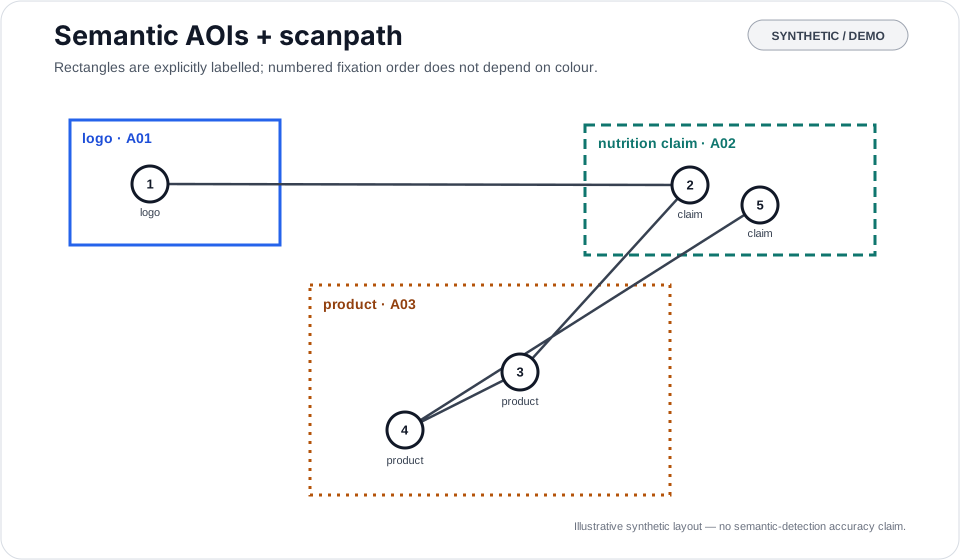
Use for: communicating reviewed spatial or semantic sequence structure.
Do not infer: latent cognitive states from sequence geometry alone.
Dynamic AOIs
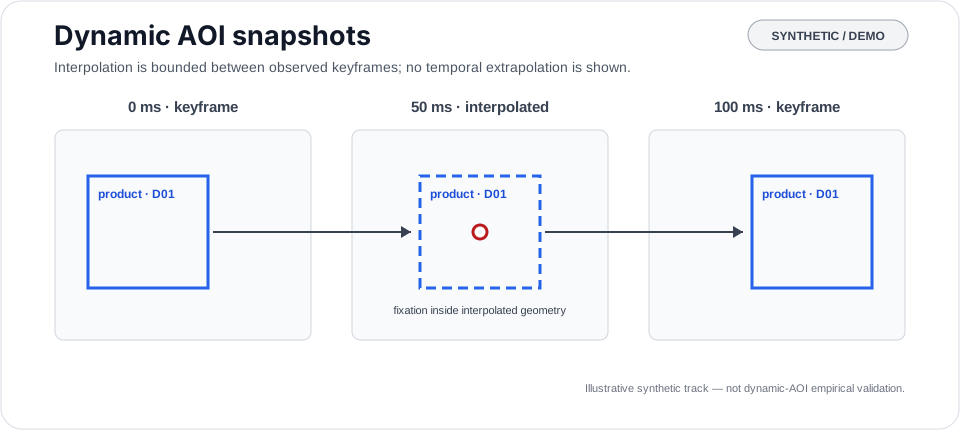
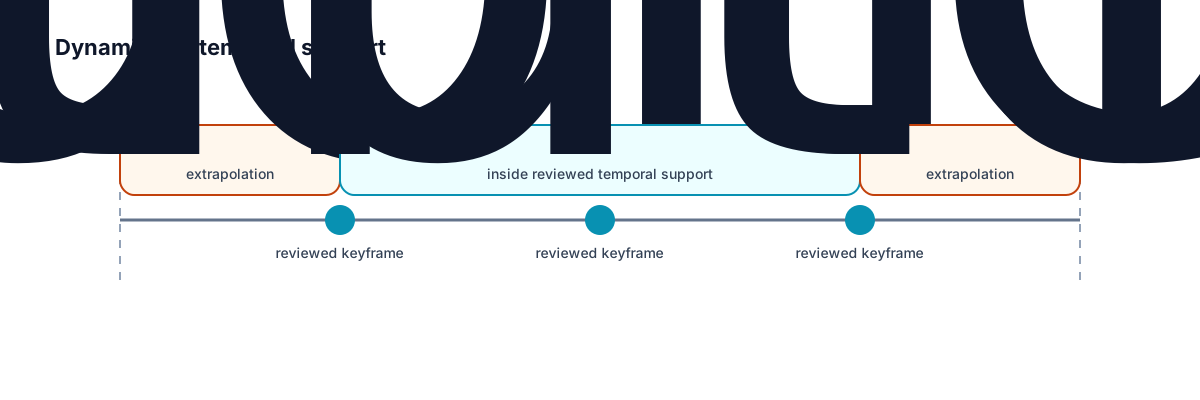
Use for: distinguishing reviewed temporal support from bounded interpolation.
Do not infer: that extrapolated boxes outside reviewed support are validated AOIs.
Validation design
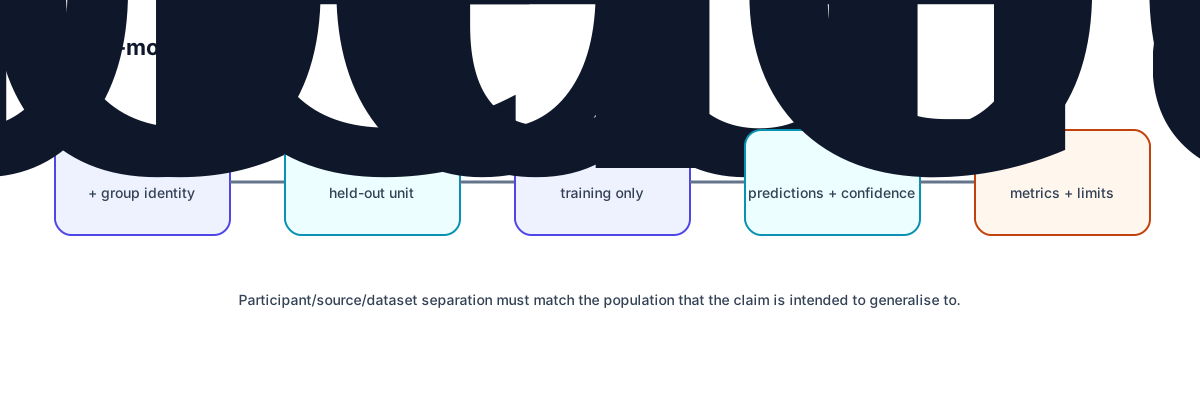
Use for: explaining why grouping and held-out unit identity belong in the validation claim.
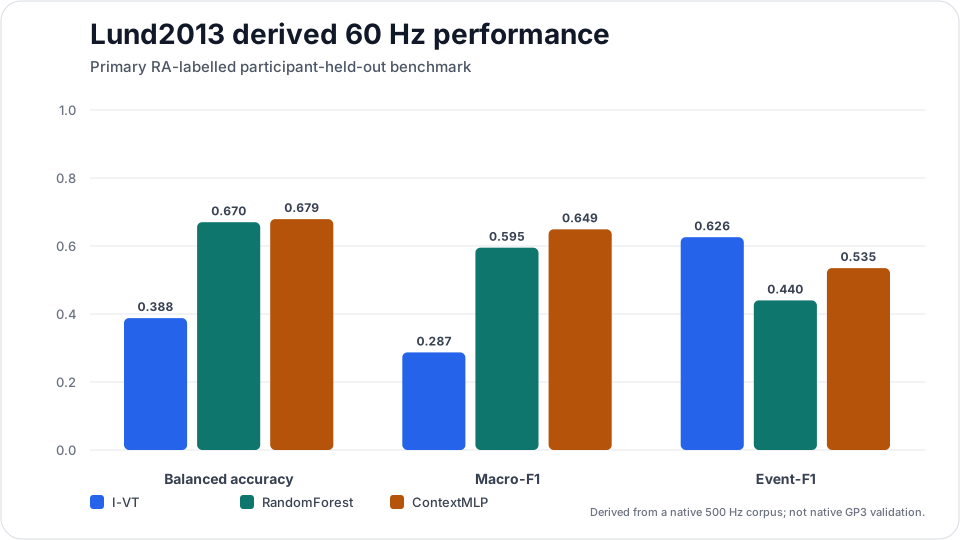
Benchmark evidence
Lund2013 derived-60 evidence
Hollywood2EM derived-60 evidence
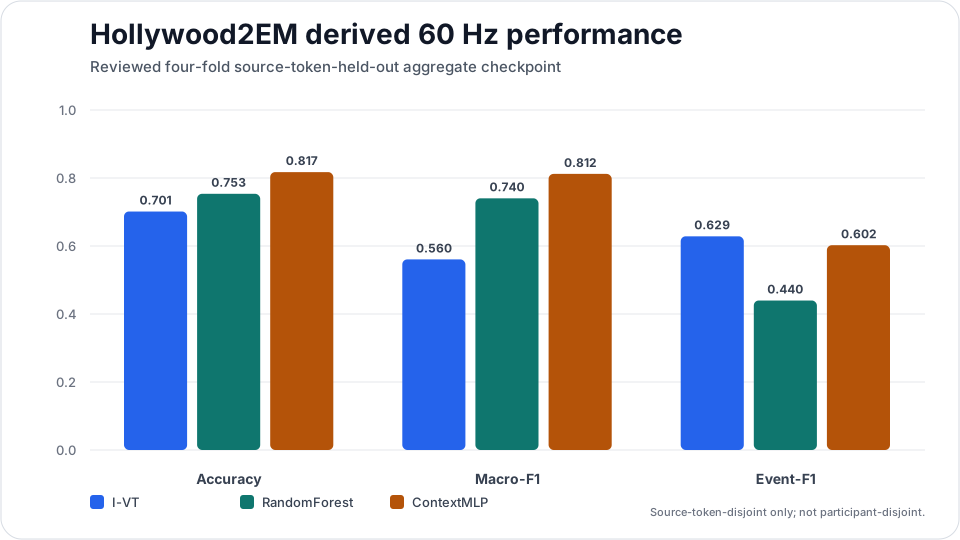
Do not infer: that derived-rate evidence is equivalent to native-device evidence.
Location-scale modelling
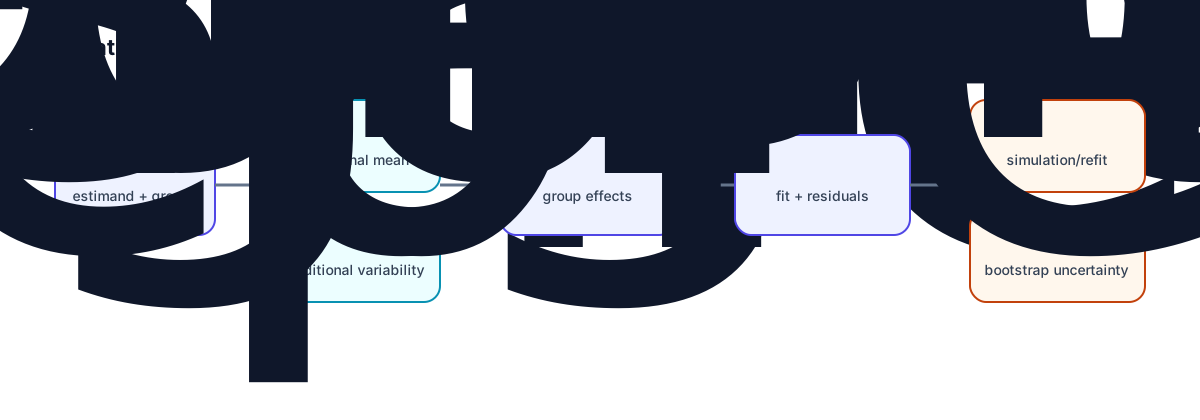
Use with hierarchical location-scale models, residual calibration, and bootstrap Monte Carlo precision.
Observation and denominator states
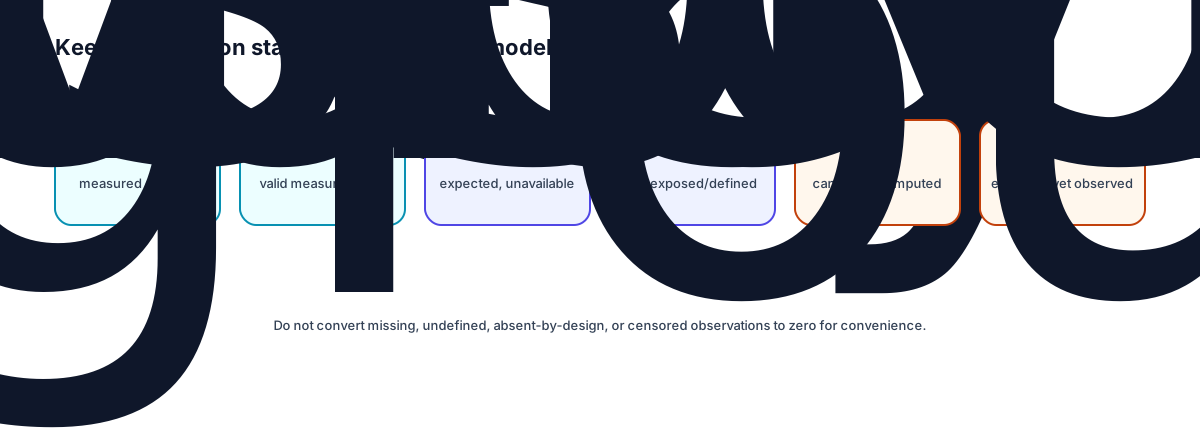
Use for: explaining why zero, missingness, absent-by-design states, undefined quantities, exposure, and right-censoring must remain distinct in a statistical handoff.
Do not infer: that a convenient numeric encoding is scientifically interchangeable with the underlying observation state.
Use with Denominator, exposure & censoring, Missing-data assumptions, and Analysis handoff.
Provenance chain
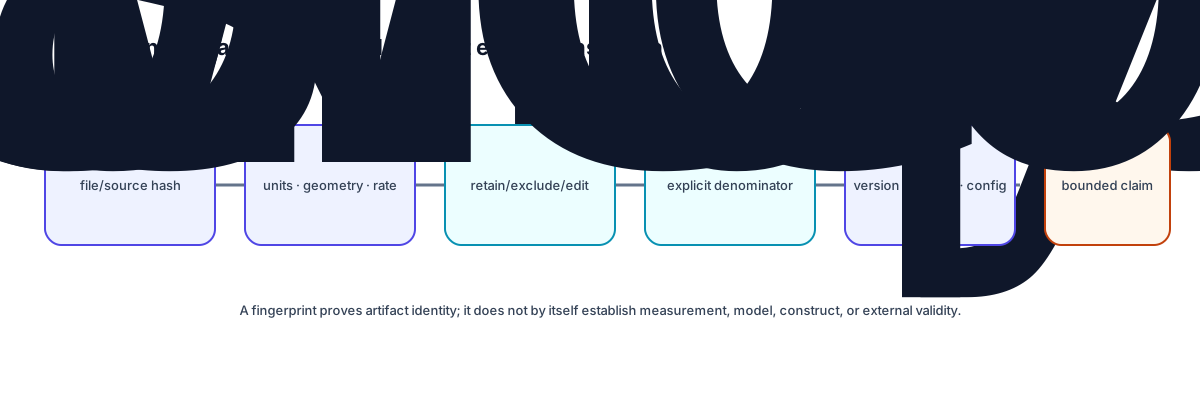
Use for: showing where hashes, transformation specifications, review ledgers, analysis derivatives, and software identity belong in a reproducible record.
Do not infer: that matching hashes alone establish measurement, construct, model, or external validity.
Use with Research evidence bundle, Reviewer & replication handoff, and Reproducible reporting.
Held-out validation boundaries
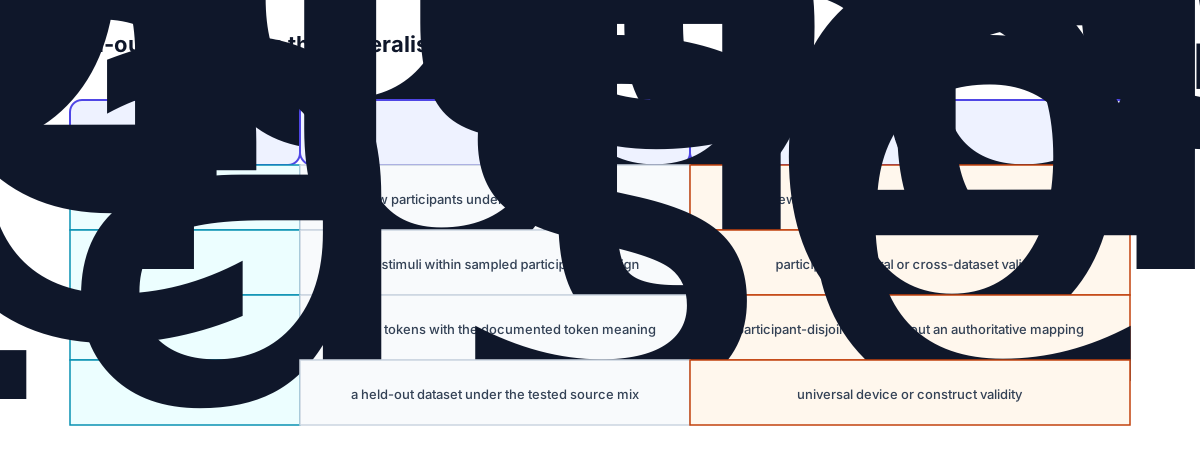
Use for: matching the held-out unit to the population or source boundary that the validation claim is intended to address.
Do not infer: participant-disjointness from opaque source tokens, or universal validity from a single held-out dataset.
Use with Event-model validation clinic, Cross-dataset events, and Validation evidence guide.